Science
Light Science behind Chiu
An all-in-one sleep light designed around human rhythm
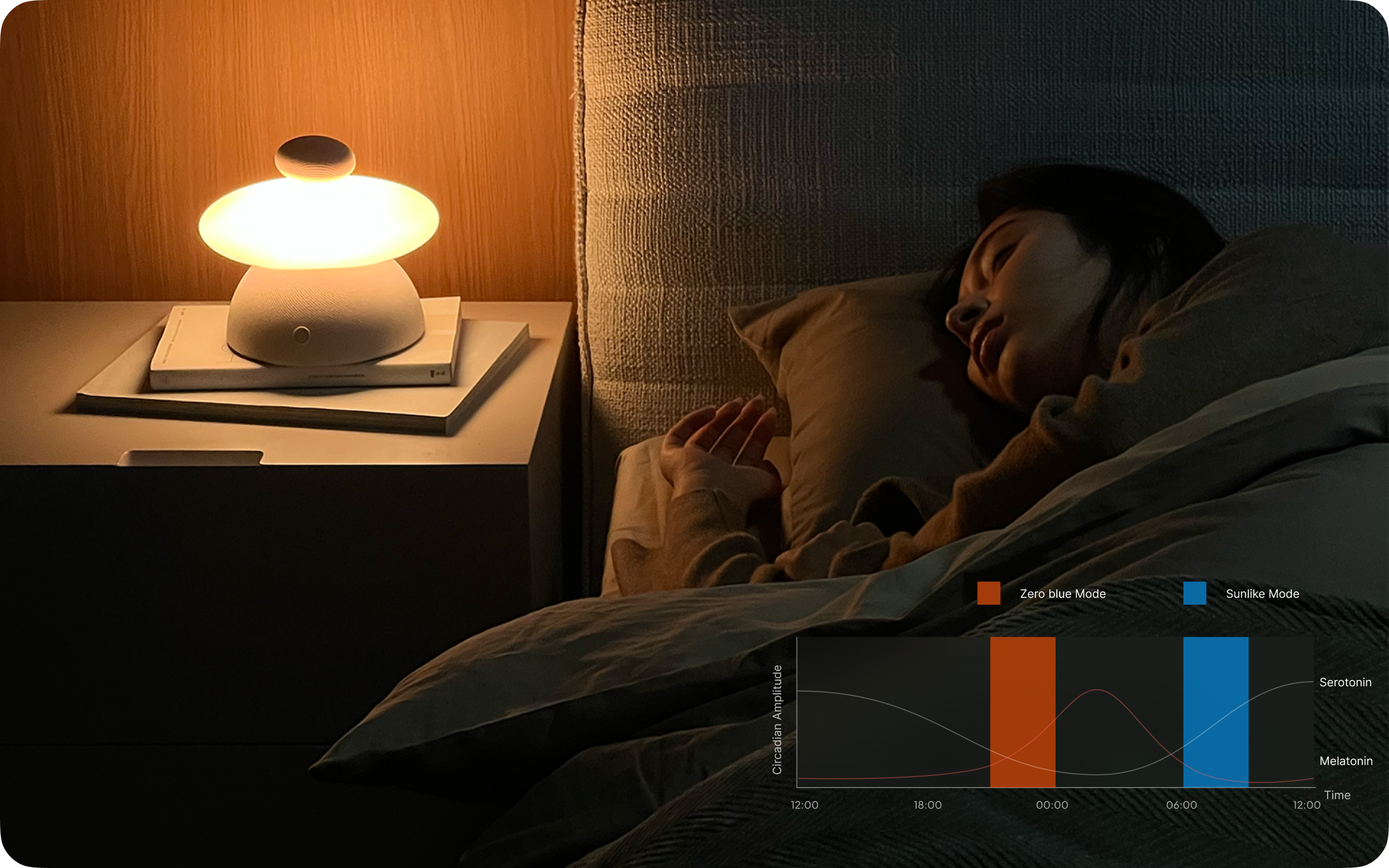
Our bodies follow a natural 24-hour cycle. Light is one of the strongest signals that tells the body when to wake, focus, relax, and sleep. But modern life often breaks this rhythm: we get too little natural light during the day, and too much blue-rich screen light at night. Chiu is designed to bring light back into sync with the body.
Chiu works with this natural rhythm through three light modes:
- Golden Zero-Blue Light for evening wind-down and protect nighttime melatonin.
- SunLike Full-Spectrum Light for boost serotonin for daytime vitality.
- Dynamic Emotion Light for stress relief and relaxation.
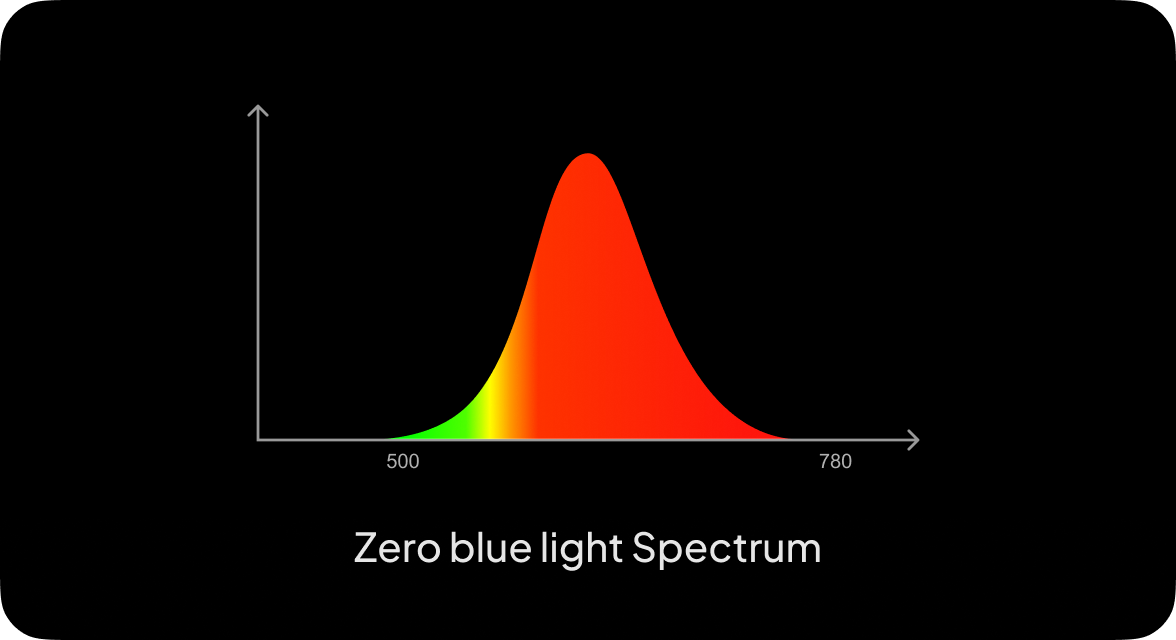
Behind Zero blue light.
Blue light is useful during the day, but disruptive at night. The human eye is especially sensitive to short-wavelength blue light around 460-480 nm. Studies show that this range strongly suppresses melatonin, which is why phones, computers, and cool-white LEDs can make the brain feel like it is still daytime.
Chiu's Golden Zero-Blue Light mode is designed to reduce this nighttime disruption. It does not create melatonin. It helps protect the conditions that allow melatonin to rise naturally. Chiu also helps soften the visual environment around screens. It cannot cancel blue light already emitted by a phone, but it can reduce the room's overall blue-light burden and make nighttime lighting feel calmer and less stimulating.
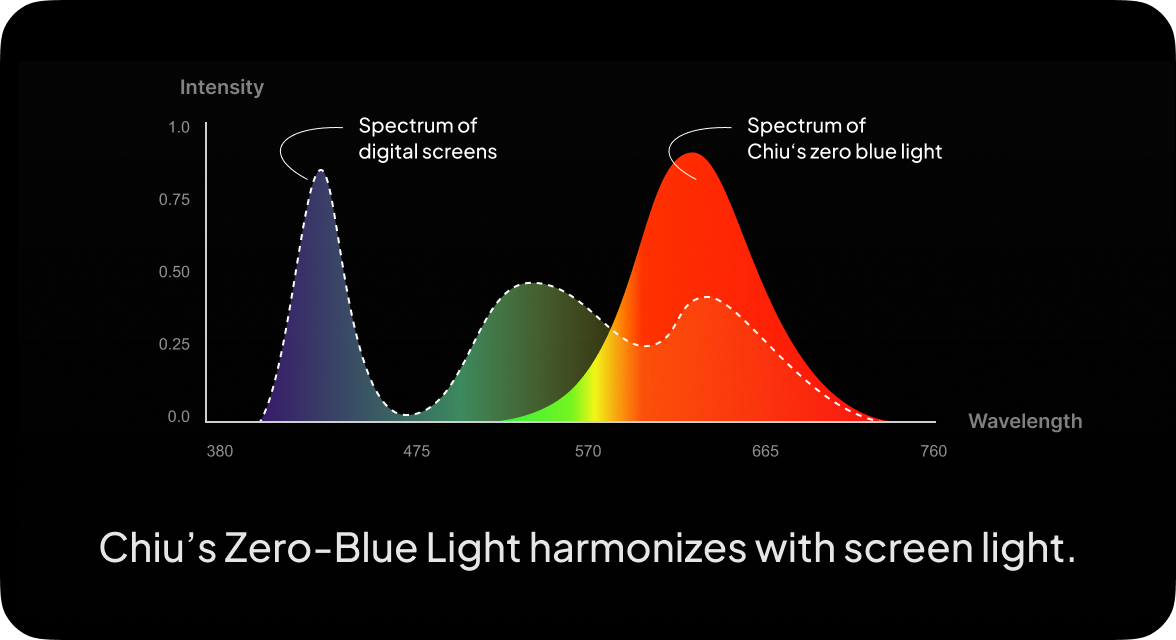
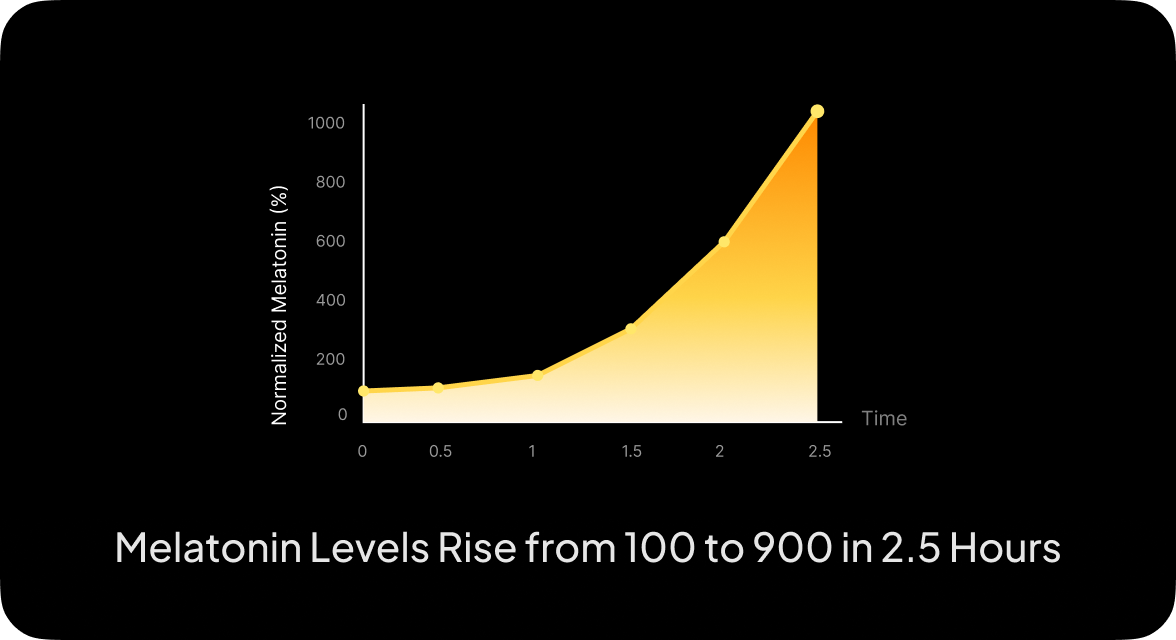
Professor Hai Lu, Vice President of CIE and professor at Tongji University, conducted a joint Antarctic scientific expedition study with the Polar Research Institute of China. The experiment showed that golden-yellow LEDs can help extend sleep duration by 25 minutes and facilitate sleep onset by helping participants fall asleep 6 minutes earlier, thereby improving the sleep-quality of expedition members.1
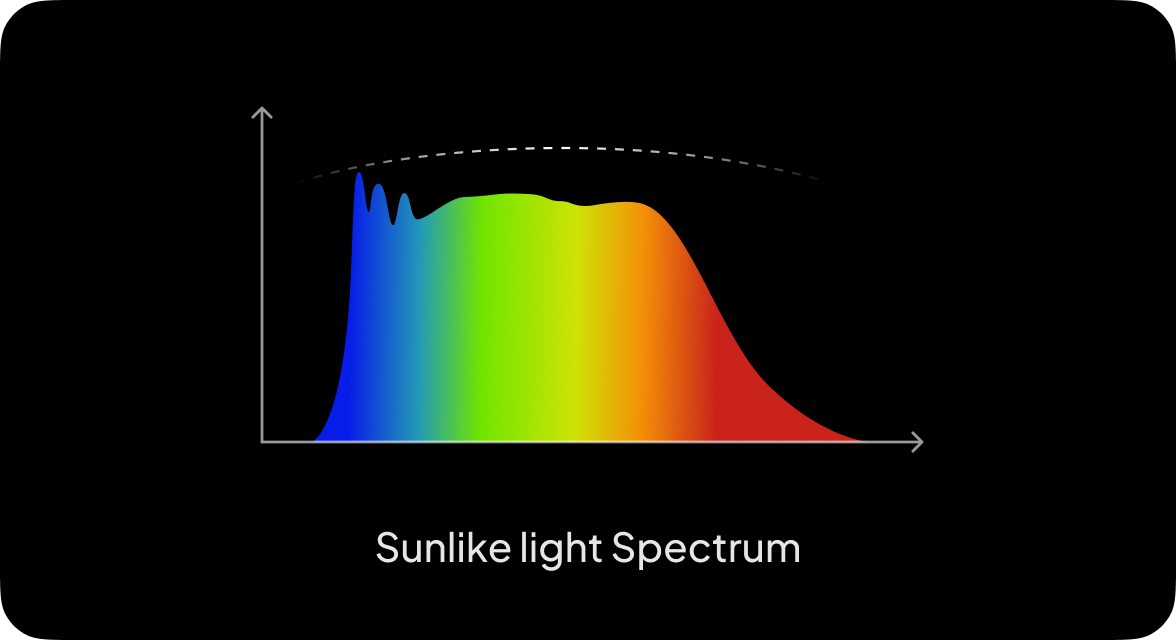
Behind Full spectrum light.
Good morning light needs the right spectrum. Natural morning light contains a balanced mix of blue, green, yellow, and red wavelengths. This balance helps the body recognize that the day has started. Chiu's full-spectrum LED system is designed to simulate the feeling of morning light, especially around 9 AM, when natural light feels clear, active, and energizing. Unlike harsh blue-heavy LEDs, Chiu creates a more balanced sunrise spectrum. The goal is not to shock the user awake, but to gently support energy, focus, and mood.

The Brightest Sunrise Alarm.
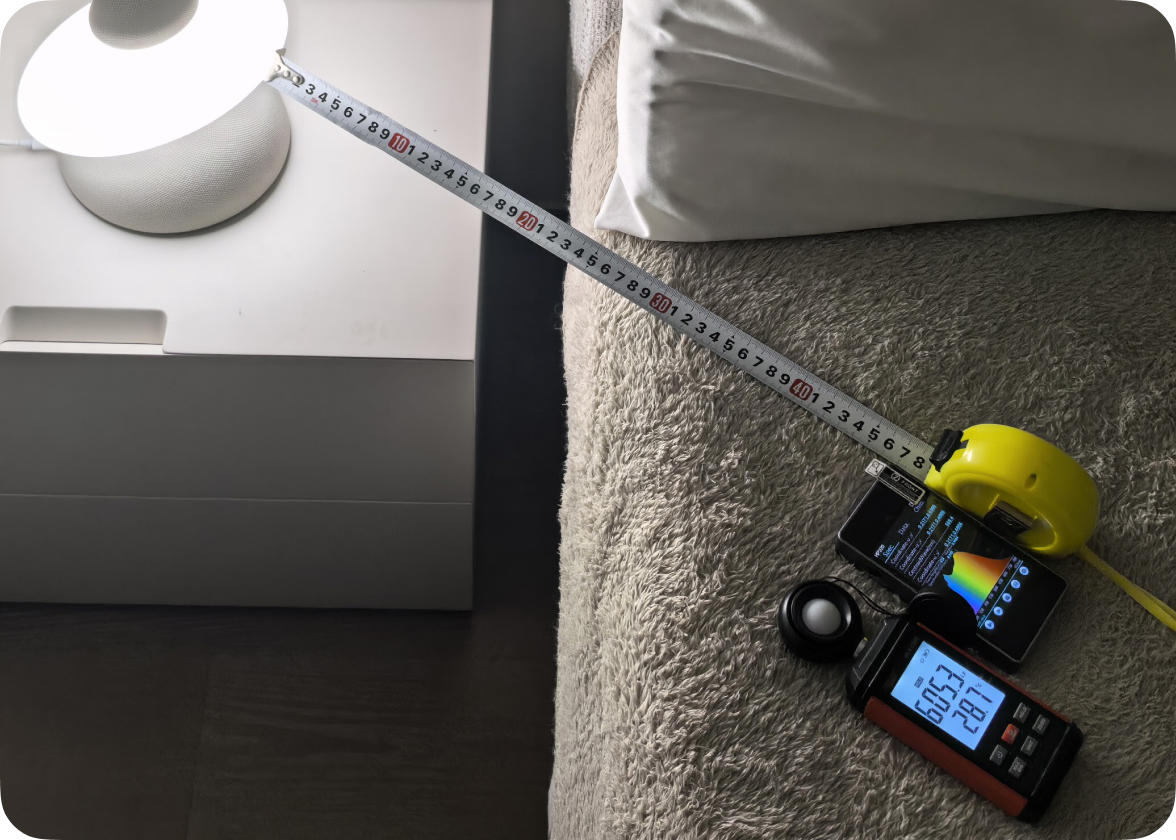
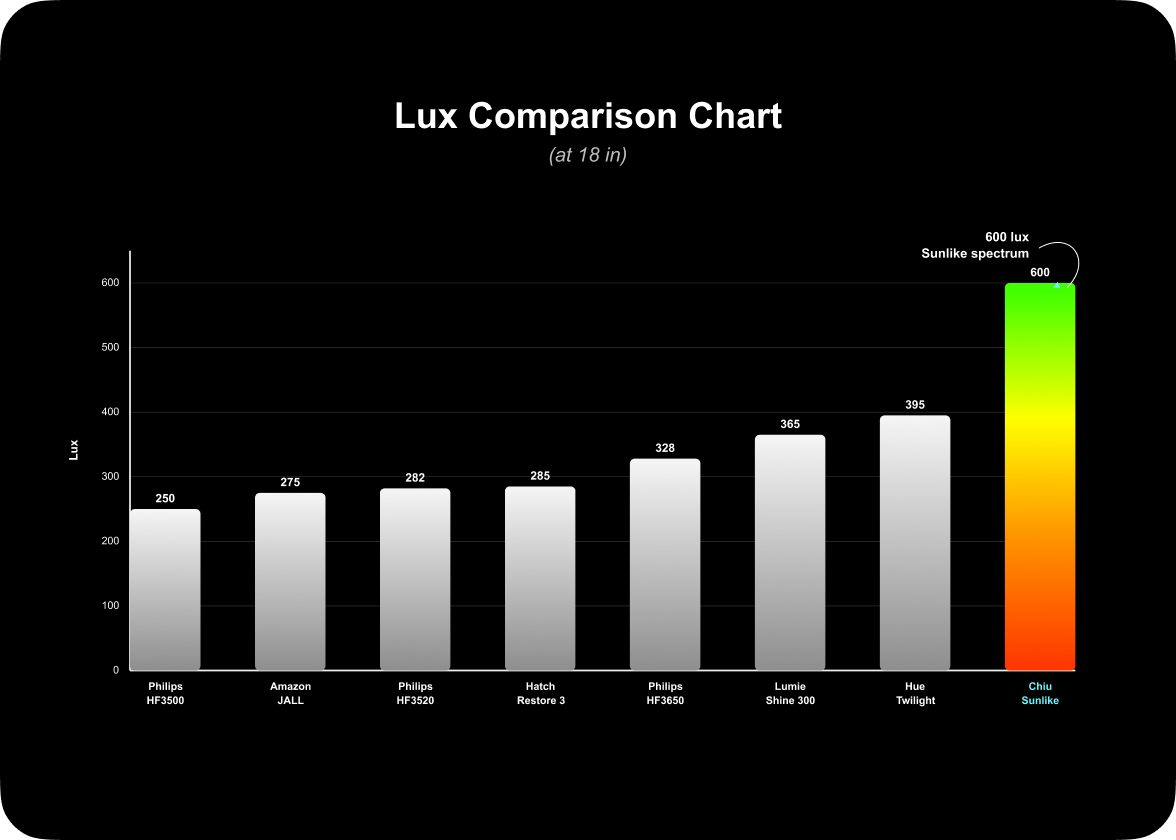
600 Lux at 18 inches. Up to 2X Brighter than existing products.
Morning light helps restore alertness and strengthen the body's sleep-wake rhythm. By giving the brain a clear daytime signal after waking, brighter light can support better circadian alignment, making it easier to feel awake in the morning and ready for rest at night.2 3
Chiu's sunrise spectrum also delivers strong daytime brightness performance, reaching 600 lux at 18 inches. Compared with the leading wake-up and bedside light competitors in the market, Chiu significantly outperforms them in usable illuminance, offering a brighter and more effective light signal for daytime activation and circadian support.
Dynamic Emotion Light.
Chiu's Dynamic Emotion Light supports the transition from a busy day to a restful night through two calming light experiences.
Breathing Light guides breathing exercises with gentle light rhythms. As the light expands and fades, users naturally follow the pace of each breath, helping release tension and settle the mind before sleep. Nature-Inspired Light recreates familiar nighttime moments, from candlelight to a glowing campfire. Paired with soothing sounds, these warm, low-blue lights create a calming atmosphere that feels safe, familiar, and relaxing.
Together, these light experiences help shift the body from stress to stillness, gently preparing the mind and body for rest.
Research References